
California's climate is anything but uniform. Bakersfield summers push past 110°F. San Jose mornings can be damp and cool even in July. Santa Barbara deals with coastal humidity while Fresno sits in a Central Valley heat trap. Managing indoor comfort across this range of conditions requires insulation that does more than slow down heat — it needs to seal your building, manage moisture, and deliver consistent performance year after year.
Open-cell spray foam insulation is one of the most effective tools available for doing exactly that. At CAL FOAM Inc., we specialize in professional open-cell spray foam installation for homes, commercial buildings, and agricultural structures throughout California. We are a licensed, owner-operated contractor based in Strathmore — License #1123937 — and we bring hands-on expertise to every project we take on.
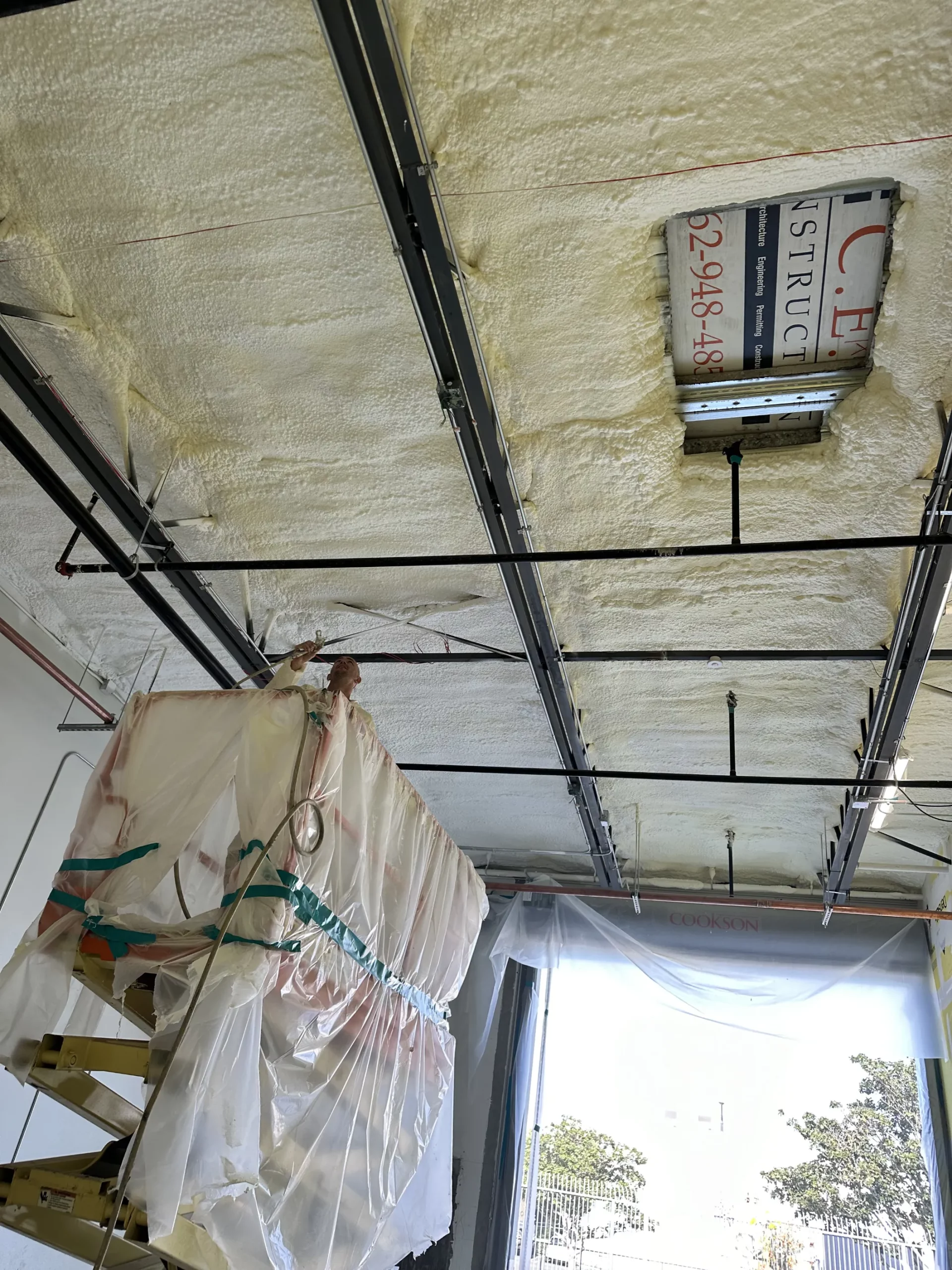
Open-cell spray foam is a two-component insulation material that expands on contact with the surface it is applied to. As it expands, it forms a structure of tiny, interconnected cells — hence the name "open-cell." These cells are not sealed, which gives the material a soft, sponge-like texture and makes it highly effective at absorbing and damping sound.
Unlike fiberglass batts that simply fill a cavity, open-cell spray foam bonds to the surface it is applied to and expands to fill every gap, seam, and irregularity. This creates a continuous, seamless insulation layer with no cold bridges or air leakage pathways. The foam has an R-value of approximately R-3.7 per inch, which is lower per inch than closed-cell foam but still significantly outperforms fiberglass batts in real-world performance because of its superior air sealing.
Both types are spray foam, but they behave very differently:
CAL FOAM Inc. installs both types. During your free assessment, we will recommend the right product — or combination of products — based on your building's specific needs.
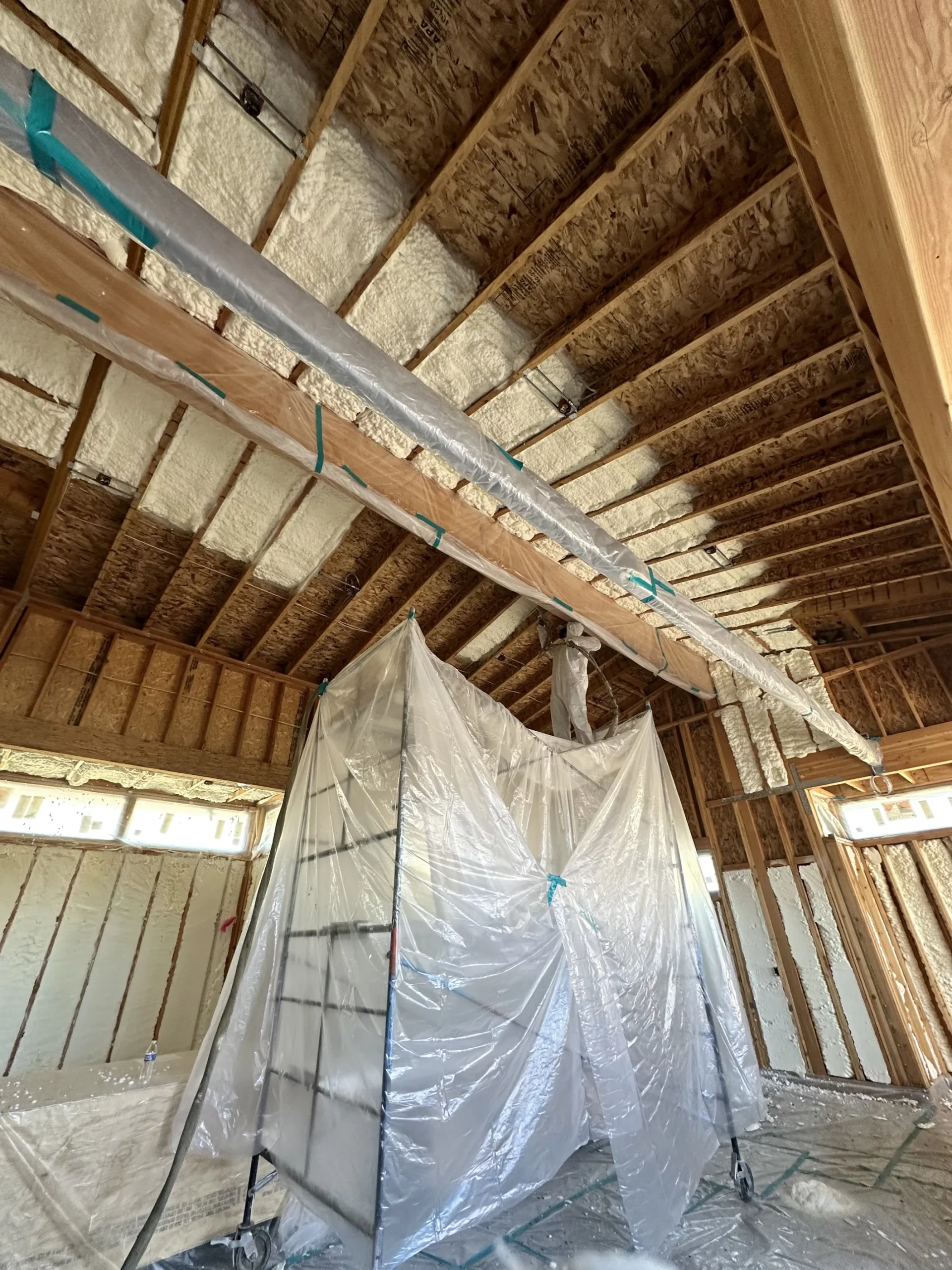
Every CAL FOAM Inc. project starts with a site assessment — not a phone quote. We walk your building, identify air leakage pathways, review existing insulation if present, and discuss your performance goals. From there we develop a scope of work and provide a detailed written estimate. On installation day, we mask all surfaces that should not receive foam, apply the material to the correct thickness for the target R-value, inspect the work against spec, and leave the site clean. For projects where foam is left exposed, we apply an approved thermal barrier coating in compliance with California building code.
Ready to take the next step? Call CAL FOAM Inc. at (805) 225-3626 or visit calfoaminc.com to schedule your free on-site assessment. We serve Strathmore, Bakersfield, Fresno, Los Angeles, Sacramento, San Jose, Stockton, Anaheim, Riverside, Modesto, Turlock, Santa Barbara, San Luis Obispo, Paso Robles, Lancaster, Victorville, Napa, Santa Rosa, Redding, and communities across California. License #1123937.
Open-cell spray foam delivers approximately R-3.7 per inch. California's Title 24 energy code requires R-13 to R-21 for walls and R-30 to R-49 for attics depending on climate zone. At 3.5 inches thick (standard stud cavity), open-cell foam achieves approximately R-13. For higher R-value targets, we can increase thickness or recommend a hybrid approach with closed-cell foam on the exterior face of the cavity. Open-cell foam consistently outperforms rated R-values in real buildings because of its air sealing, which fiberglass at the same nominal R-value cannot match.
Yes. Once fully cured — within 24 hours of application — open-cell spray foam is chemically inert and does not release harmful compounds. During installation, applicators use proper PPE and ensure adequate ventilation. Occupants should stay clear of the work area during spraying and for a few hours afterward. All products used by CAL FOAM Inc. comply with California VOC regulations and relevant health and safety standards.
In some cases, yes — using injection techniques through small access holes. However, open-cell spray foam is most effectively installed in open wall cavities during new construction or renovation when walls are exposed. For existing closed walls, we assess the situation during our site visit and recommend the most practical approach, which may include open-cell injection foam or other retrofit solutions.
No — open-cell spray foam is vapor-permeable, not a vapor barrier. In many California climate zones, this is actually the preferred approach because walls need to be able to dry if they get wet. If a vapor barrier is required for your specific wall assembly or climate zone, closed-cell spray foam is the appropriate choice. We will advise you on the right vapor management strategy for your building during the assessment.
A typical residential attic or wall cavity project takes one to two days. Larger or more complex buildings take longer. We provide project timelines during the estimation phase, and we work to minimize disruption to your household or business operations.
Yes, meaningfully. Wildfire smoke enters buildings primarily through air infiltration — the same gaps and cracks that open-cell spray foam seals. Homes with tighter building envelopes from spray foam insulation consistently show lower indoor smoke concentrations during wildfire events compared to homes insulated with fiberglass batts. This is an increasingly important consideration for California homeowners.
Pricing depends on the square footage being insulated, the application thickness required for the target R-value, the accessibility of the space, and any preparation work needed. We do not provide reliable quotes over the phone — the variables matter too much. Contact us for a free on-site assessment and written estimate.