Homeowners and business owners across Santa Maria and the Central Coast rely on spray foam insulation to control energy costs and maintain comfortable indoor temperatures year-round. Spray foam creates an air-sealed barrier that reduces heat transfer, which means your HVAC system works less and your utility bills stay lower. We apply this solution to attics, walls, crawl spaces, and commercial buildings throughout the region.
Our team at CAL FOAM Inc. works with both open-cell and closed-cell foam, each suited to different structural needs and budgets. We assess your property’s layout, climate exposure, and insulation goals before recommending a specific approach.
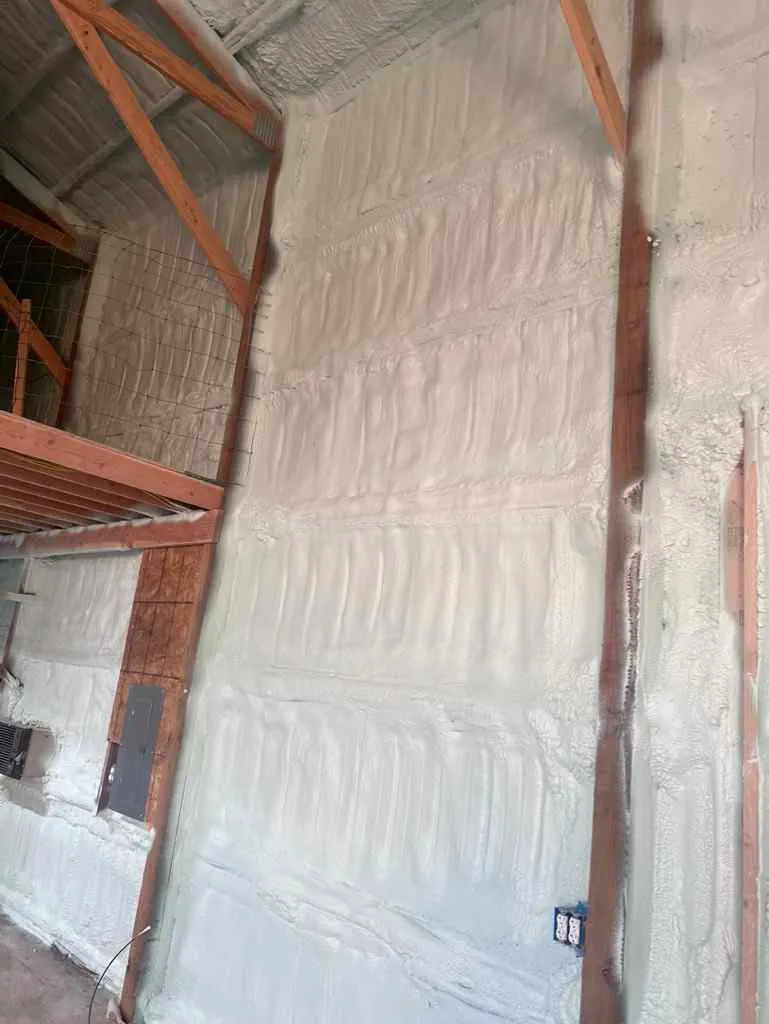
Open-cell and closed-cell spray foam each serve different purposes depending on R-value needs, moisture exposure, and the structure of the space. We select the right product based on your project’s specific conditions rather than a one-size-fits-all approach.
Open-cell foam has a lighter, softer structure that allows it to expand significantly after application. This makes it well-suited for filling irregular wall cavities, attic spaces, and areas with hard-to-reach corners.
We typically use open-cell foam for interior applications where sound dampening is a priority, since its cellular structure absorbs noise more effectively than denser alternatives. It offers a lower R-value per inch compared to closed-cell foam, but its expansion properties mean it fills gaps thoroughly without requiring excessive material.
This type works well in interior walls, attic rafters, and other spaces that are not exposed to ground moisture or extreme weather conditions.
Closed-cell foam has a denser, rigid structure that delivers a higher R-value per inch than open-cell foam. We recommend it for applications where space is limited but insulation performance needs to stay high.
Its tight cellular makeup also gives it moisture resistance, which makes it a practical choice for:
Beyond insulation, closed-cell foam adds structural rigidity to the surfaces it’s applied to. We often install this type in commercial buildings and homes where durability and long-term performance are priorities, particularly in regions with fluctuating temperatures or coastal humidity common to the Santa Maria area.
Both foam types create an air seal when applied correctly, which reduces drafts and limits unconditioned air from entering living or working spaces. We focus on sealing gaps around windows, doors, outlets, and structural penetrations where air leakage typically occurs.
This sealing function works alongside the insulation itself to stabilize indoor temperatures throughout the year. When air leakage is minimized, heating and cooling systems don’t have to work as hard to maintain consistent conditions.
We assess each property’s air leakage points during the initial inspection, so the foam application addresses both insulation value and air infiltration in a single process.
CAL FOAM Inc. provides spray foam insulation solutions designed around the needs of each property.
Our team has experience installing spray foam insulation for different property types and applications. We follow proper installation practices to help ensure consistent coverage and effective air sealing.
From home insulation projects to larger building applications, CAL FOAM Inc. works with different property types and insulation requirements. We help customers find suitable spray foam solutions based on the space being insulated.
We begin by assessing your insulation needs, explaining the recommended approach, and providing a quote. Our team then completes the installation and reviews the finished work with you so you understand what was done.
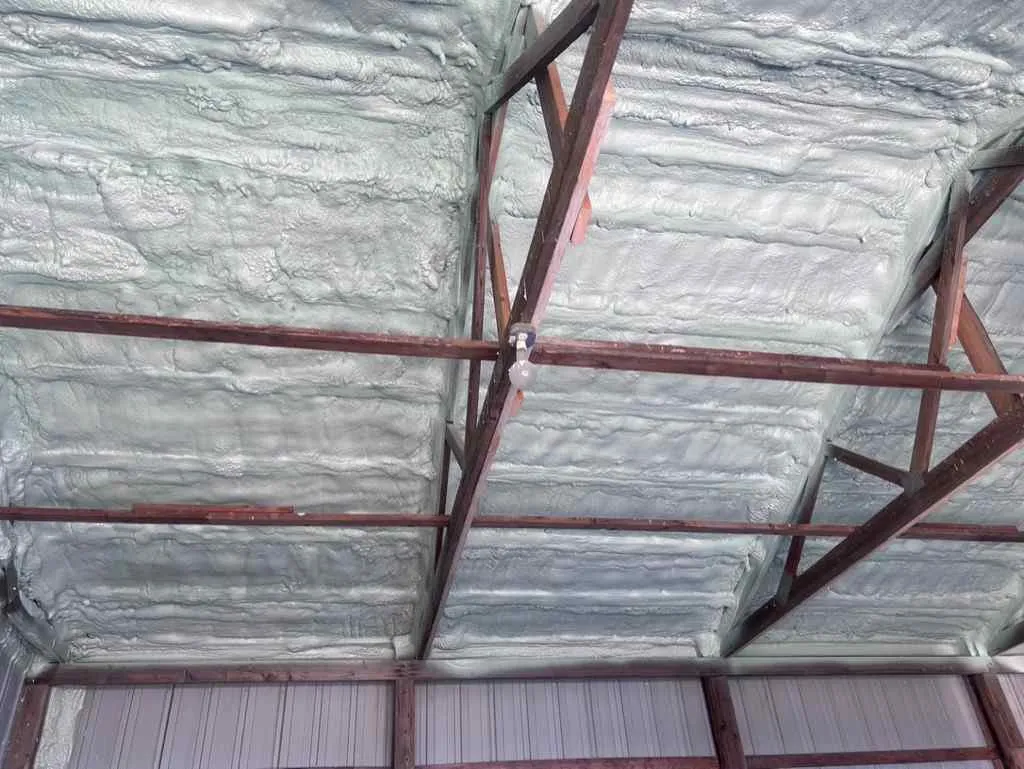
Spray foam insulation works across nearly every part of a building, from attics and crawl spaces to large commercial structures. We apply it based on the specific area, framing type, and performance needs of your property.
Attics lose and gain heat faster than most other areas of a building, which makes them a priority for insulation work. We apply spray foam directly to the underside of the roof deck or along the attic floor, depending on your home’s design and ventilation setup.
This approach seals gaps around rafters, vents, and recessed lighting that often let air escape. Closed-cell foam adds rigidity to the roofline, while open-cell foam fills irregular spaces more easily.
Either option reduces heat transfer and limits moisture buildup in the attic space. We assess your existing ventilation before recommending a foam type, since attic insulation decisions affect airflow throughout the rest of the house.
Wall cavities, crawl spaces, and rim joists each present different insulation challenges. We use spray foam to fill wall cavities during new construction or retrofit projects, creating a continuous barrier that fiberglass batts can’t match.
In crawl spaces, foam helps control moisture and reduces the risk of wood rot or pest intrusion. Rim joists, located where the foundation meets the floor framing, are a common source of drafts and energy loss.
We target these areas specifically because they’re often overlooked during standard construction. Sealing them with spray foam closes off a direct path for outside air to enter the living space.
Commercial properties and metal buildings require insulation that handles larger spans and different material surfaces. We apply spray foam to steel framing, metal panels, and concrete block walls found in warehouses, retail spaces, and agricultural buildings.
Metal buildings are prone to condensation because metal conducts heat and cold quickly. Spray foam adheres directly to the metal surface, reducing condensation risk and improving interior temperature control.
This application suits a range of commercial uses:
We size each project according to the building’s square footage, ceiling height, and intended use.
Spray foam insulation fits both new builds and retrofit projects, though the process differs slightly for each. During new construction, we install foam before drywall goes up, giving us full access to wall cavities, ceilings, and framing.
For existing buildings, we work around finished surfaces, often accessing spaces through attics, crawl spaces, or small openings cut into walls. Retrofit projects typically focus on areas with known air leaks or inconsistent temperatures.
New construction allows for more complete coverage from the start. Upgrades to existing buildings target specific problem areas, making them a practical option for homeowners and business owners looking to improve performance without a full renovation.
A successful spray foam project starts with local knowledge, moves through careful product selection and site prep, and ends with a clean, verified result. Here’s how we handle each stage of your project from start to finish.
Before any work begins, we conduct a thorough on-site evaluation of your property. This includes checking existing insulation levels, identifying air leaks, and assessing moisture risks in attics, crawl spaces, and walls.
Based on this assessment, we recommend either open-cell or closed-cell foam:
We factor in your budget, building type, and performance goals before finalizing a recommendation. Every assessment is documented so you understand exactly why we’ve chosen a specific foam type for your space.
You can also explore our complete insulation services to find the right solution for your property.
Proper preparation protects your property and ensures the foam cures correctly. Our crews cover surfaces, seal off work areas, and set up ventilation before any spraying starts.
We use calibrated equipment to control foam thickness and expansion rates, which keeps application consistent across the entire surface. Temperature and humidity are monitored throughout, since both affect how foam cures.
Our technicians follow manufacturer specifications for mixing ratios and spray patterns. This reduces the risk of under-application or excess buildup, both of which can compromise insulation performance over time.
Once application is complete, we inspect the foam for even coverage and proper adhesion to all surfaces. Any gaps or inconsistencies are addressed before we consider the job finished.
Ventilation is critical during the curing period. We set up fans or open specific areas to help off-gas properly, depending on the foam type used.
We provide clear reentry guidelines based on the product’s cure time, typically ranging from a few hours to 24 hours. You’ll receive written instructions so your household or employees know when it’s safe to return to treated areas.

Santa Maria, California, is a city with a rich history and a vibrant community. Founded in 1874, it has grown into a thriving area known for its agricultural heritage, welcoming atmosphere, and strong local economy.
With its mild climate and proximity to beautiful beaches and scenic wine country, Santa Maria offers an appealing quality of life for residents. The city features a variety of amenities, including parks, restaurants, and shopping centers, along with excellent schools and a strong sense of community that makes it a great place for families.
We would like to thank the residents of Santa Maria for their continued support and trust throughout the years. As a trusted spray foam insulation contractor, we are proud to help local homeowners and businesses improve indoor comfort and energy efficiency. We also serve nearby communities, providing Arroyo Grande spray foam insulation for property owners looking for reliable insulation solutions. Our services extend to the surrounding region, including spray foam contractor in San Luis Obispo and Santa Barbara spray foam insulation. Thank you for choosing us as your insulation provider in Santa Maria.
EXCELLENT Based on 26 reviews
 Posted on Google

 Jake KnottsWe needed a 20’ container spray foamed on very short notice. Derek and his team from Cal Foam did an excellent job, worked efficiently, and were very professional all the way around. Highly recommend.Posted on Google
 Tyler HaugenGreat experience with CalFoam on our cabin project! They used closed cell spray foam to provide a permanent air seal and moisture barrier in a tight space. The added sound proofing is a huge plus, and the cabin stays at a constant temperature. If you want the top current insulation for any build, give these guys a call!Posted on Google
 EvaThis company lives up to its 5 Star review. I had a terrible rodent problem in the underside of my older mobile home. It had become a haven for rodents living in the insulation between the vapor barrier and subfloor. It was (from my point of view) a job from hell; not to mention the smell, the jagged serpentine rocks to navigate over and the slope of the land that minimized head space for half of access to the underneath of the mobile. Despite those deterrents Cal Foam Dereck Chester maintained a positive, personable attitude. In a timely manner all the old nasty insulation and vapor barrier were removed and taken away. The real gem of service is post underbelly renewal. The entire sub floor and cross supports are encased in a glacier looking foam material that will not melt. Haha. Actually it is a very hard material thick enough to insulate, but shallow enough for no burrowing! The finished product looks like hell frozen over and to me (I’ve been battling rodents for years and been down below many times) that’s what it is! Hell frozen over and I thank Cal Foam. You will be pleased with this company. They are reliable, responsible and provide excellent service!Posted on Google
 Kaitlin ChesterThe team at Cal Foam provided an excellent experience, from phone call to having our addition insulated 2 days later! Spray foam insulation has made this the most comfortable room in the house!Posted on Google
 Marisa PeltierCal Foam did an amazing job! Their work was very clean and even which I really appreciate! We used them for a cathedral ceiling and we couldn’t be happier.Posted on Google
 Richard HowardCal foam is a group of hard working brothers. They recently came to spray my house masked everything up and cleaned up really well after themselves. Spray was neatly installed and looked very professional. Would highly recommend for any spray insulation needs. They’re not afraid to travel either!Posted on Google
 ChevyThis company is a five star company. They go above and beyond the job they do. They take pride and joy in there work. I was very happy with the time they responded to my estimate. They did an amazing spraying job on my garage. I would recommend them to do your job.Posted on Google
 Rocio MadrigalExcellent service from start to finish! The team was on time, professional, and did a fantastic job insulating our home. We’ve noticed a big difference in comfort and lower energy bills already. Highly recommend! Derek was very quick to answer the phone!Posted on Google
 JayDerek and his team spray-foamed my exterior wall and ceiling to improve insulation for my future home office. They were great to work with—scheduling and negotiation were smooth and straightforward. The team arrived on time as promised and completed the job within the expected timeframe. Overall, it was a pleasant and hassle-free experience doing business with them!Posted on Google
 Andrew KellyCal foam did a great job insulating the roof of my garage/shop space and applying intumescent paint. Looks good and the space now stays much cooler.
Stop drafts, lower energy bills, and enjoy year-round comfort with professional Spray Foam Insulation. Contact CAL FOAM Inc. today for a free inspection and see how much you can save.
Pricing depends on the square footage, the foam type selected, and the complexity of the space being insulated. Closed-cell foam typically costs more per square foot than open-cell foam due to its density and material composition.
We provide a free, on-site assessment to give you an accurate quote based on your specific property. This allows us to account for factors like attic access, wall cavity depth, and existing insulation that may need removal.
Open-cell foam has a softer, sponge-like texture with cells that remain uncompressed. It offers strong sound-dampening qualities and works well for interior walls and areas where moisture exposure is minimal.
Closed-cell foam contains sealed cells filled with a blowing agent gas, giving it a denser structure. This density provides a higher R-value per inch and adds rigidity, making it suitable for areas exposed to moisture or requiring structural reinforcement.
Yes, we install spray foam in both new construction and existing structures. In retrofit projects, we access wall cavities, attics, and crawl spaces through minimal openings to apply foam without extensive demolition.
Commercial buildings often require spray foam in areas like metal buildings, warehouses, or mechanical rooms. We adjust our application methods to fit the building type and existing conditions.
Most residential projects take between a few hours and one full day, depending on the size of the area and the foam type used. Larger commercial jobs may require multiple days to complete.
We assess the scope during your consultation and provide a time estimate specific to your project. Factors like ceiling height, square footage, and accessibility all affect the timeline.
We recommend that occupants, including pets, stay out of the treated area for at least 24 hours after application. This allows the foam to fully cure and off-gas any residual odors.
Proper ventilation during this period helps speed up the curing process. We can advise on specific timing based on the foam type and the size of the treated space.
Some roofing manufacturers have specific guidelines regarding spray foam application on roof decks, so we review your roof warranty details before installation. This step helps confirm that the foam application won’t void existing coverage.
Homeowners insurance generally isn’t affected by spray foam insulation itself, but we recommend informing your insurance provider about any major home improvement. This keeps your policy accurate and up to date.